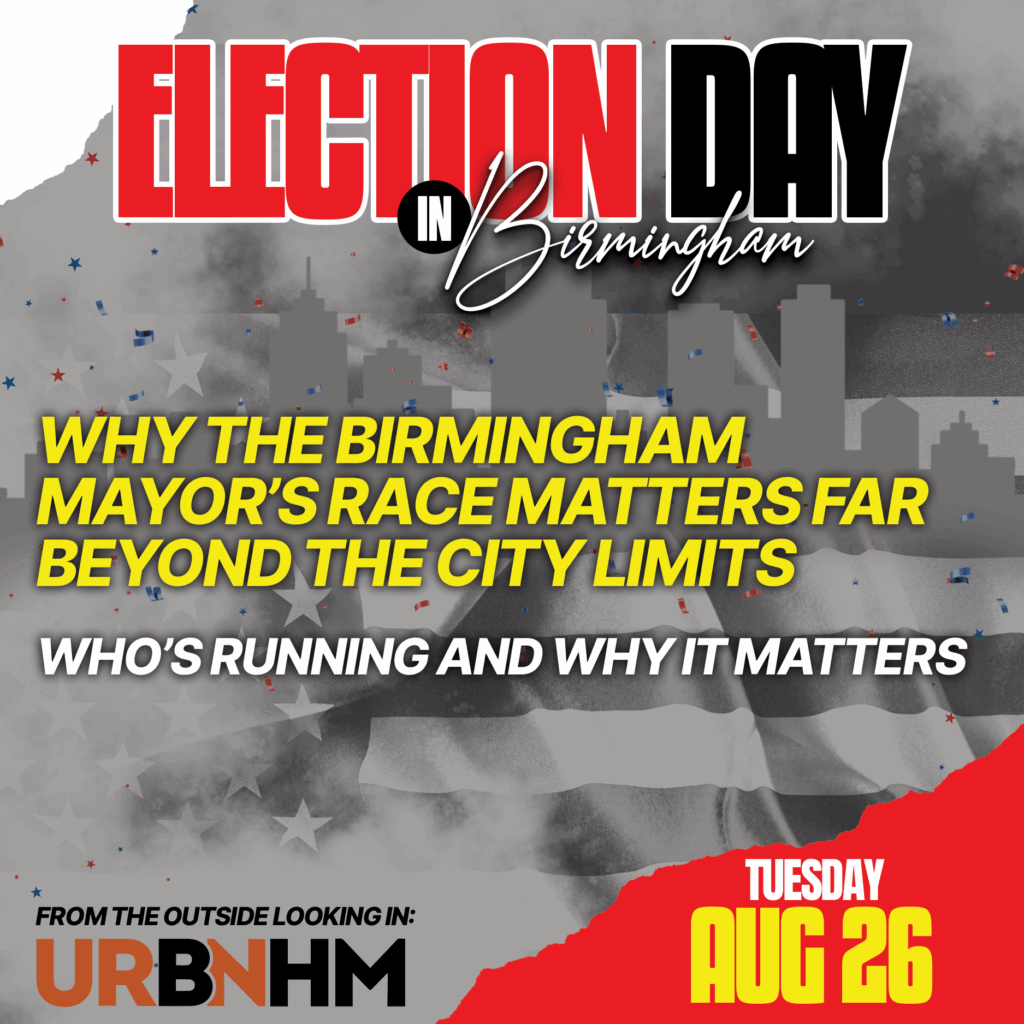
From the Outside Looking In: Why the Birmingham Mayor’s Race Matters Far Beyond the City Limits
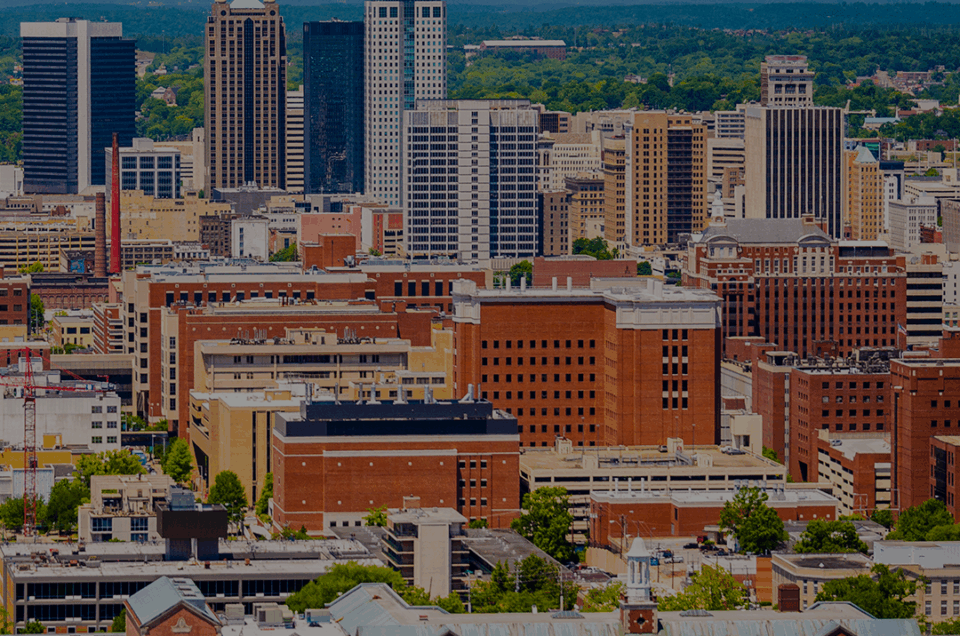
In a city known for shaping civil rights history, Birmingham is once again standing at the intersection of power, politics, and progress. But this time, it’s not just the city watching — it’s the entire state. As the 2025 Birmingham mayoral race heats up, its ripple effects are being felt well beyond the city’s borders. From Montgomery to Mobile, and from rural towns to growing suburbs, what happens in Birmingham will help shape Alabama’s political and economic landscape for years to come.
Local Election, Statewide Stakes
At first glance, you might think the mayor’s race is a local matter. But when the state legislature voted to strip Birmingham’s control over its own Water Works Board — handing it to a governor-appointed, suburban-controlled body — the gloves came off. The state’s move triggered a federal lawsuit led by Mayor Randall Woodfin, who called it a dangerous precedent of state overreach and voter disenfranchisement.
Why does that matter? Because Birmingham is a majority-Black city, and decisions that dilute local power have serious implications for equity, representation, and democracy. The mayoral office is now a frontline defender in a much bigger battle over who gets to decide how Alabama’s largest city is run — and by extension, how the rest of the state navigates local autonomy versus centralized control.
Who’s Running and Why It Matters
Current Leading Contenders
Randall Woodfin (incumbent): Seeking a third term backed by progressive allies, Woodfin emphasizes legal resistance to state overreach, economic development, and community investment. A Woodfin victory signals a continuation of local control and aggressive policy advocacy.
Juandalynn Givan (State Representative): Longtime legislator turned mayoral candidate, Givan offers deep experience in housing, law, and state politics. Her election could change the city-state relationship dynamic—but her move would also leave a legislative vacancy in Montgomery.
LaShunda Scales (Jefferson County Commissioner): Scales finished second in 2021 and is doubling down on her message of change. As a sitting county commissioner and former city councilor, she brings extensive knowledge of municipal and regional government—emphasizing blight, declining population, and a call for new leadership.
Other Official Candidates
Kamau “Marlon” Afrika (Real-Estate Investor / Activist): A perennial candidate, Afrika speaks directly to grassroots communities, focusing attention on neglected neighborhoods and calling for structural neighborhood investment.
Frank Woodson (Nonprofit Executive/Pastor): Promising inclusive leadership, Woodson focuses on jobs, civil rights, and rebuilding trust with underserved residents. He positions himself as a community-first alternative to entrenched incumbents.
Brian K. Rice (Mechanical Engineer & Property Owner): A life‑long Ensley resident and real estate owner, Rice emphasizes local credibility, redevelopment in neglected neighborhoods, and community advocacy rooted in practical experience.
David Russell (Retired Insurance Salesman / Civic Activist): A long-time political candidate, Russell runs on a vision for transforming Ensley into a Black Wall Street–style economic hub, advocating annexation and economic justice initiatives to restore the city’s status as Alabama’s largest.
Jerimy Littlepage (Forklift Operator / Community Advocate): A relative newcomer, Littlepage runs on a promise to prioritize working-class residents and grassroots engagement.
Marilyn James-Johnson: A community-minded candidate looking to bring new perspectives to city leadership, though limited public information is available on her platform.
Why It Matters
Incumbent vs. New Leadership: Woodfin’s re-election bid represents continuity of policy and institutional control, while challengers like Givan, Scales, and others offer competing visions for neighborhood equity, outreach, and governance style.
Diversity of Perspectives: From legislative power (Givan) and county oversight (Scales) to grassroots activism (Afrika), nonprofit leadership (Woodson), and local development focus (Rice), the field offers a broad range of lived experiences. However incumbents that are scandal free and popular like Woodfin can be hard to unseat.
At the heart of Birmingham’s future is the voice of its people. With so many diverse candidates and critical issues on the table—from economic revitalization to neighborhood development and public safety—it’s more important than ever for registered voters to show up and be counted. Voting isn’t just a civic duty; it’s a direct investment in the direction of our city. Every ballot cast is a statement that we care about where Birmingham goes next—and who leads us there. If we want to see change, renewed trust, and bold progress, it starts with participation. Let’s move Birmingham forward—together.
Urbanham.com