
If Alabama Isn’t #1 in Football … Then What Are We?
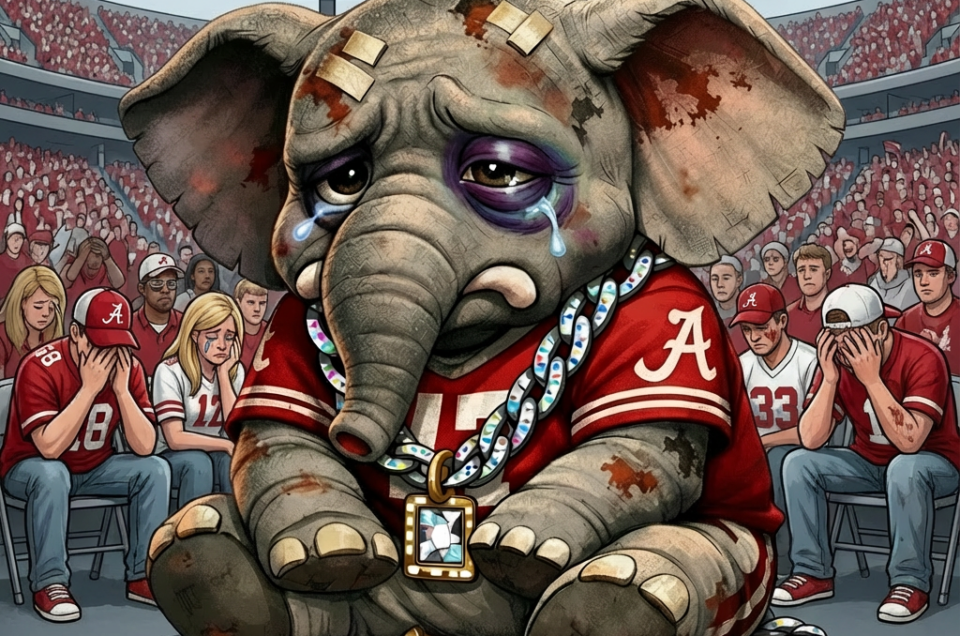
For generations, football hasn’t just been a sport in Alabama—it’s been an identity. The Iron Bowl rivalry, Friday Night Lights played out across small towns and cities, and the countless young athletes pushed to chase their limits have all helped make the state a true football mecca. Championships became shorthand for excellence. Dominance on Saturdays became proof that Alabama could be the best in the country at something.
For many, college football has been the one arena where Alabama never had to apologize, explain, or catch up. Thanks in large part to the beloved Alabama Crimson Tide, the state remained in the national spotlight under the leadership of two college football legends: Paul “Bear” Bryant and Nick Saban.
So here’s the uncomfortable question:
If Alabama football is no longer the undisputed standard… then what are we?
Not as fans.
Not as a program.
But as a state.
Football as a Cultural Cover Story
For decades, football success softened conversations Alabama hasn’t always wanted to have. When rankings came out—about education, healthcare, income, or opportunity—football was often the rebuttal.
“We may struggle here, but look at what we do on the field.”
And for a long time, that worked.
But football dynasties rise and fall. That’s the nature of sports. What doesn’t change as quickly are the systems that shape daily life: schools, hospitals, infrastructure, innovation, and quality of life.
If the scoreboard no longer protects our pride, what else is Alabama leading in?
How Alabama Ranks Beyond the Field
When we zoom out from Bryant-Denny Stadium and look across national data sets, a more complicated picture emerges.
Education
Alabama has made progress in early literacy initiatives and workforce training, but the state continues to rank near the bottom nationally in K–12 outcomes and higher-education attainment. Teacher shortages, rural school funding gaps, and college completion rates remain major challenges.
Education is the long game—and right now, Alabama is still playing catch-up.
Health
From maternal mortality to chronic disease rates, Alabama consistently ranks among the lowest states in health outcomes. Rural hospital closures, limited access to primary care, and preventable illness shape life expectancy and quality of life—especially in Black and rural communities.
You can’t build a championship state on unhealthy foundations.
Technology & Innovation
Alabama punches above its weight in aerospace, defense, and advanced manufacturing, particularly in cities like Huntsville and Birmingham. But statewide broadband access, tech workforce density, and startup ecosystems still lag behind national leaders.
The future economy is digital—and parts of Alabama are still buffering.
Quality of Life
A low cost of living remains a strength, but it is often paired with lower wages, limited public transportation, and uneven access to cultural and recreational assets. Where you live in Alabama can dramatically shape your experience of the state.
Opportunity shouldn’t depend on your ZIP code.
By the Numbers
If the Crimson Tide no longer stands uncontested on the gridiron, how does Alabama stack up as a place to live, work, and raise a family?
On objective quality-of-life measures, Alabama frequently falls toward the lower end of national rankings. WalletHub’s 2025 livability study places the state well below average in education and health, contributing to a low overall ranking among the 50 states. In education specifically, Alabama ranked 43rd nationally in WalletHub’s public school system analysis. Health outcomes also remain concerning: the United Health Foundation ranked Alabama 42nd in overall health system performance, while America’s Health Rankings placed the state 45th nationally.
Additionally, U.S. Census Bureau data shows that approximately 41% of Alabama households report difficulty affording everyday expenses—one of the highest percentages in the country. While affordability remains a relative strength, these broader indicators suggest there is significant work to be done if Alabama hopes to compete with the nation’s top states in education, health, and opportunity.
Now compare that reality with a recent College Football Playoff opponent we need not relive.
Indiana, for example, ranked 33rd overall in U.S. News & World Report’s 2025 Best States rankings, with stronger showings in education (19th) and opportunity (16th). WalletHub places Indiana near the national midpoint for overall quality of life, while another WalletHub analysis ranked Indiana’s public school system 8th in the nation.
The contrast is telling.
The Conference Crown Is No Longer Secure
For nearly two decades, the Southeastern Conference was widely regarded as the strongest conference in college football—built on championships, NFL-ready talent, and unmatched depth. That dominance, led for years by Alabama, became assumed rather than debated.
But recent postseason results tell a different story.
Conference Bowl Records (2025–26 postseason, including Indiana’s recent win over Oregon)
- Big Ten: 10–4 (.714)
- ACC: 8–4 (.667)
- Big 12: 4–4 (.500)
- SEC: 4–10 (.286)
With NIL-driven recruiting, expanded playoff access, and shifting media economics, conferences like the Big Ten and ACC have closed the gap—and in some cases surpassed the SEC on the field. In today’s landscape, power is no longer inherited; it must be proven every season.
Wealth, NIL, and the New Economics of College Football
Another often-overlooked factor in the shifting balance of power is access to concentrated private wealth. Alabama, as a state, has a limited billionaire footprint—often cited as having only one resident billionaire—while its flagship university, the University of Alabama, has no confirmed billionaire alumni among well-documented graduates. Auburn University has slightly more exposure at the extreme high end, with alumni such as Jimmy Rane and David Zalik reaching billionaire or near-billionaire status, but even that pool remains relatively small.
By contrast, Indiana benefits from a deeper billionaire ecosystem, including Mark Cuban, an Indiana University alumnus whose wealth and visibility highlight how alumni capital can intersect with athletics, business, and influence. The gap widens further when looking at Miami, where a dense concentration of ultra-high-net-worth individuals surrounds the University of Miami, creating a fundamentally different NIL and fundraising environment.
In an era where elite college rosters increasingly resemble professional operations, access to flexible private capital matters. Tradition alone is no longer enough; modern college football is shaped by financial gravity as much as geography.
The Real Championship Question
This isn’t about tearing down Alabama football. It’s about not hiding behind it.
Great programs don’t excuse weak systems.
Championship banners don’t educate children.
Saturday wins don’t replace Sunday emergency rooms, Monday classrooms, or Friday paychecks.
If Alabama wants to remain proud—with or without a dynasty—we have to decide what we want to be known for next:
A state that develops talent on and off the field.
A place where people don’t just grow up—but stay, build, and thrive.
A leader not just in tradition, but in transformation.
Redefining “Roll Tide”
Maybe the next era of Alabama pride isn’t about being #1 in football.
Maybe it’s about being:
- Top 20 in education
- Top 25 in health outcomes
- A national model for rural innovation
- A place where quality of life matches quality of tradition
A Not so Grim Picture of the State
Alabama possesses several structural advantages that many states would envy. It consistently ranks among the nation’s leaders in cost of living and housing affordability, making homeownership and small-business formation more attainable than in most parts of the country. The state is a national force in manufacturing, aerospace, and defense, anchored by global automotive plants, a growing Port of Mobile, and one of the country’s most significant aerospace hubs in Huntsville. Alabama also benefits from a strong military presence, reliable energy production, and a strategic logistics footprint that supports long-term industrial growth. Perhaps most uniquely, Alabama is home to more Historically Black Colleges and Universities than any other state, representing a powerful — and still underleveraged — pipeline for talent, innovation, and cultural leadership. These assets matter, and they provide a foundation on which meaningful progress can be built.
Of course, by September 2026 we’ll be back intact—ready once again to believe our teams are the best in the country.
Only time will tell if NIL becomes a constant nemesis to college football in the South.
Because dynasties end.
But states—and the people who live in them—have to last.
And if Alabama football no longer carries the identity of the state, maybe that’s not a crisis at all—but an opportunity to reimagine what it will take to truly rise to the top.
