
From the Outside Looking In: Is Jefferson County Losing People?

Every few months, the same conversation resurfaces:
“People are leaving Jefferson County.”
On the surface, it sounds like a warning sign — a signal that something is wrong or that Birmingham’s core is losing its grip. But when you step back and actually look at what’s happening, a different story begins to emerge.
From the outside looking in, Jefferson County isn’t experiencing a mass exit.
It’s experiencing a shift in where growth is landing.
The Shift Isn’t Out — It’s Around
The biggest movement isn’t people leaving the Birmingham region altogether. It’s people relocating just outside of Jefferson County while staying connected to the same economic and cultural ecosystem.
Counties seeing the most noticeable growth include:
- Shelby County – one of the fastest-growing areas in the state, driven by new housing developments, schools, and proximity to Birmingham
- St. Clair County – attracting families looking for more space and affordability along the I-20 corridor
- Blount County – steady growth tied to lifestyle, land availability, and quieter communities
- Walker County – benefiting from affordability and accessibility to the metro
These counties aren’t replacing Jefferson County — they’re expanding the footprint of the Birmingham metro.
Why People Are Moving
This shift isn’t random. It’s driven by a combination of practical and lifestyle factors that are reshaping how people choose where to live:

More Space, Newer Housing
New subdivisions and larger lots are drawing families outward, especially in areas where development is booming.
Affordability
In many cases, homebuyers can get more for their money just outside Jefferson County — a major factor in today’s housing market.
Schools and Family Priorities
School systems and family-oriented communities continue to influence relocation decisions.
Access Without Sacrifice
With interstate access and remote work flexibility, many residents can live farther out without giving up jobs, business, or social connections tied to Birmingham.
The Metro Is Still Growing
What often gets lost in the narrative is that the Birmingham metro as a whole is still growing.
People are still moving into the region.
Businesses are still investing.
Events, culture, and commerce are still anchored in Jefferson County.
The difference is that growth is now being distributed across the region instead of concentrated in one place.
Jefferson County Is Still the Anchor
Even with outward movement, Jefferson County remains:
- The economic engine of the region
- The cultural hub for entertainment, dining, and events
- The central destination for work, healthcare, and major institutions
People may be changing their zip code, but they’re not disconnecting from Birmingham.
They’re still commuting in.
Still spending in the city.
Still participating in the culture.
A Regional Opportunity
Instead of viewing this shift as a loss, it can be viewed as an opportunity.
A growing outer ring means:
- A larger regional population base
- Expanded economic reach
- More interconnected communities
If leveraged correctly, this could strengthen Birmingham’s position as a central hub while allowing surrounding counties to absorb residential growth.
What Can Be Done to Retain and Reconnect Residents?
If growth is moving outward, the question becomes: how does Jefferson County remain not just the center — but the place people choose to stay?
From the outside looking in, the opportunity isn’t about stopping the shift.
It’s about competing within it.
Invest in Livable Communities
Housing options matter. From workforce housing to mixed-use developments, creating places where people can live, work, and spend time within close proximity will be key.
Strengthen Infrastructure and Accessibility
Ease of movement — whether through roads, transit, or walkable districts — plays a major role in where people choose to live long-term.
Prioritize Schools and Family Ecosystems
For many families, decisions start with education. Continued investment in schools and youth programming helps anchor long-term residency.
Support Local Business and Lifestyle Experiences
People don’t just live where it’s affordable — they live where there’s something to do. Supporting restaurants, entertainment, and cultural experiences keeps Jefferson County competitive.
Think Regionally, Not Just Locally
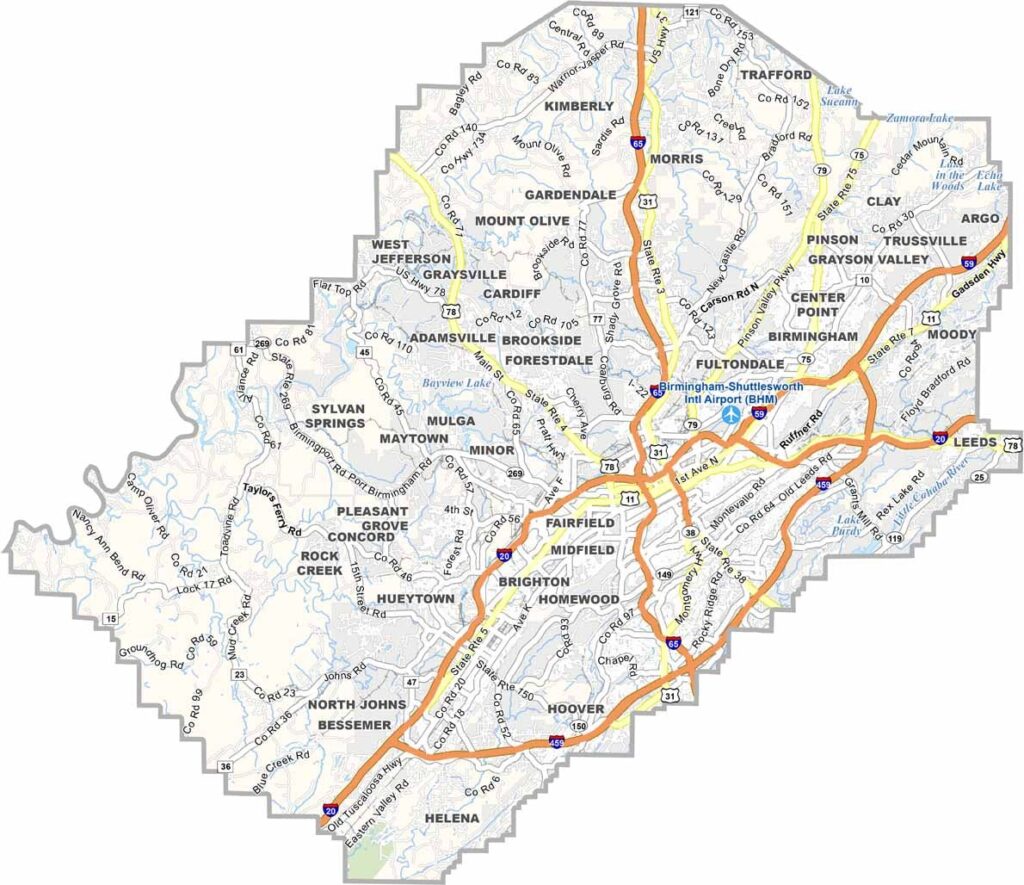
It’s not entirely accurate to say Jefferson County is losing people — growth has simply slowed and, in some cases, shifted. Many residents are still choosing to stay within the county, drawn to cities like Hoover and Trussville for suburban living; Gardendale and Fultondale for more affordable housing options; Homewood for its close-knit community feel; and Vestavia Hills and Mountain Brook for more established, high-end neighborhoods. Many of these cities also benefit from strong perceptions of safety and school systems, which often play a leading role in migration patterns.
On the west side of Jefferson County, cities like Birmingham (west areas), Midfield, Fairfield, and Bessemer have faced ongoing challenges when it comes to retaining residents and attracting new investment. Much of this is tied to a combination of factors — including aging infrastructure, limited new housing development, and the long-term effects of industrial decline that once anchored these communities. Perceptions around public safety and school systems have also influenced relocation decisions, particularly for families weighing long-term stability. In addition, fewer large-scale commercial and residential developments compared to other parts of the metro have slowed momentum, making it harder to compete with areas experiencing newer growth. The result isn’t a lack of value or history, but a need for reinvestment, strategic development, and renewed focus on creating environments that attract both residents and businesses.

At the same time, Birmingham itself continues to show signs of momentum, particularly in its urban core. The city has seen growing economic impact driven by high-quality entertainment, sporting events, and large-scale venues that consistently draw regional and national audiences. From concerts and festivals to major sporting events, these experiences are generating revenue and reinforcing Birmingham’s position as a cultural hub. In addition, there has been a steady influx of young professionals choosing downtown and surrounding districts for their walkability, access to bars and restaurants, live entertainment, and shorter commute times. This shift reflects a broader trend where lifestyle, convenience, and experience are becoming key drivers in where people choose to live, positioning Birmingham as an attractive option for a new generation of residents.

Irondale is another city quietly gaining attention as part of this regional shift, offering a strategic mix of location, accessibility, and value. Positioned along the I-20 corridor just minutes from Birmingham, the city has become increasingly attractive to both residents and businesses, supported by intentional leadership, targeted marketing, and ongoing recruitment efforts. Its growing retail presence, along with proximity to popular destinations like The Summit and the broader Grants Mill corridor, combined with high-end automotive dealerships along Grants Mill Road and Highway 280, adds strong economic energy to the area. That momentum is further amplified by nearby Leeds, where continued growth, retail destinations like the Outlet Shops of Grand River, and major attractions such as Barber Motorsports Park are helping drive eastward expansion across the metro. At the same time, Irondale offers housing options that are often more attainable than neighboring communities like Mountain Brook, Vestavia Hills, and Homewood, while still providing convenient access to many of the same amenities. With new residential developments emerging and continued investment in infrastructure, Irondale is evolving into a well-positioned option for those seeking convenience, value, and connectivity within Jefferson County.
The reality is, Birmingham and all of the cities mentioned here are interconnected. Collaboration between Jefferson County and surrounding counties can strengthen the entire region rather than create unnecessary competition that divides it.
Retention isn’t just about keeping people from leaving — it’s about giving them a reason to stay.
And in a region that’s growing outward, the counties that win will be the ones that continue to invest inward.