
Ask Black Athletes to Leave the SEC or Empower Them to Lead Change From Within?
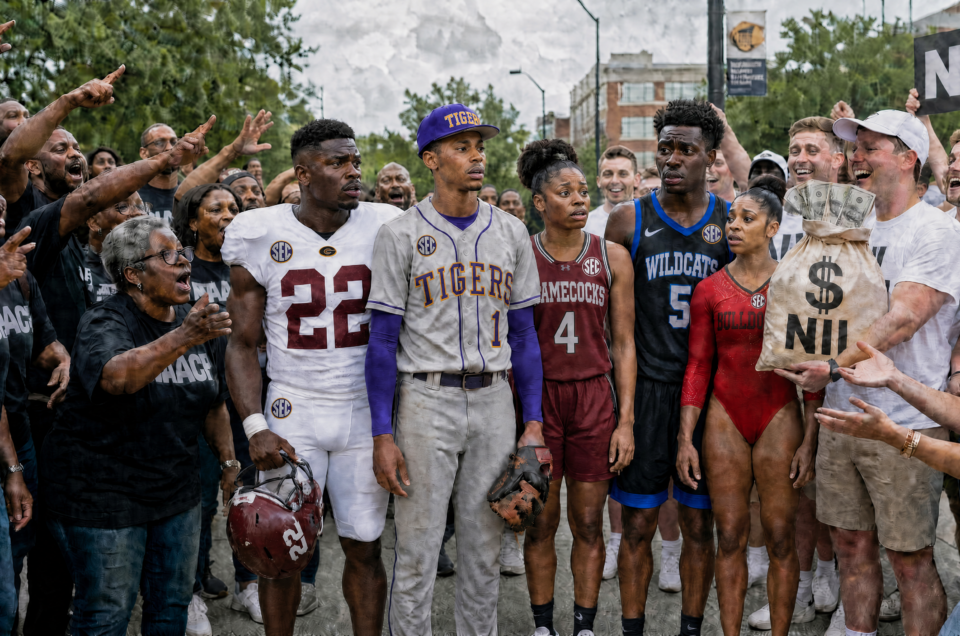
For months, conversations surrounding voting rights, redistricting, representation, and the future of Black political influence in the South have intensified. But perhaps the question was never:
“Should Black athletes stop going to SEC schools?”
Maybe the better question is:
“How do we empower athletes already inside these systems to help lead change from within?”
For generations, African Americans have often found themselves playing defense politically, economically, and socially — fighting to protect rights, preserve access, and respond to attacks on representation. Marches, sit-ins, boycotts, and protests remain essential parts of that history. They changed America.
But modern movements may require modern strategies.
The foot soldiers of the Civil Rights Movement fought from outside systems that largely excluded them, using marches, sit-ins, boycotts, and sacrifice to force America to confront injustice publicly. Today’s elite SEC athletes operate inside billion-dollar systems tied to media, culture, economics, and influence. While the mission of advocacy may remain similar, the tools available to this generation are very different. Modern athletes already possess direct access to audiences, branding power, social media influence, and economic leverage capable of educating, inspiring, and mobilizing communities in ways previous generations could only imagine.
Today’s elite athletes are not just football players and basketball stars. They are:
- media brands,
- influencers,
- entrepreneurs,
- future business owners,
- and in many cases future millionaires.
Instead of threatening their earning potential or asking families to walk away from one of the largest economic pipelines in America, perhaps organizations should focus on building partnerships that educate, empower, and prepare athletes to become informed leaders and community advocates.
And they should not do this for free!
We must also recognize that not everyone wants to continue fighting decades-long battles using only traditional or mostly outdated methods. The reality is that many of the challenges facing Black communities today are deeply connected to economics, ownership, access, and long-term sustainability. Simply put, collectively we still lack enough economic resources operating at scale within our communities, which means the strategy must also focus on creating more wealth, more infrastructure, and more opportunity. Legacy organizations should seriously consider partnering with these younger generations, investing resources into them, and then allowing them the freedom to navigate and shape a modern Black movement using tools, technology, branding, media influence, and business connections many older generations barely understand. In other words .. pay them and get out of the way. Today’s young athletes, creators, and entrepreneurs have already built personal brands, cultivated diverse networks, and gained direct access to audiences, industries, and opportunities all before graduating high school. Many of them do not operate from a constant mindset that the world is permanently collapsing around the Black community or one political party alone. Instead, they often view influence, economics, visibility, and collaboration as pathways to change. That is why any serious conversation about activism, leadership, and advocacy in this era must also acknowledge compensation, partnerships, and mutual value as legitimate parts of the discussion.
The SEC is no longer just a sports conference. It is a billion-dollar media ecosystem tied to culture, branding, business, politics, and influence. Black athletes already help power that machine every Saturday. Research suggest that from 70% to nearly all SEC football athletes get some form of direct NIL support that averages $143,000 annually. It’s about $165,000 annually for male SEC basketball players which is another topic for another day. Keep in mind that top earners command more of this money so it’s not uncommon to see football and/or basketball players on the lower end of this deal. Which in theory makes them perfect targets for other conferences and HBCUs willing to push out the money for a second or third string player.
So why not create programs that help those same athletes understand:
- how redlining affected wealth in their hometowns,
- how redistricting impacts representation,
- how education funding connects to political participation,
- and how ownership and entrepreneurship can strengthen communities?
Instead of:
“Don’t go there.”
The message could become:
“Go there prepared to lead.”
Part of that strategy should include identifying athletes early who already show interest in leadership, business, civic engagement, or community service and helping develop those interests alongside their athletic careers.
If people believe Black athletes have enough influence to impact billion-dollar SEC sports ecosystems, then surely those same athletes also have the power to:
- encourage voting,
- inspire civic engagement,
- promote entrepreneurship,
- support financial literacy,
- and become positive change agents within their communities.
Modern athletes already communicate with millions daily through podcasts, social media, livestreams, interviews, and branding partnerships. Their influence is no longer limited to sports.
And in many ways, this evolution has already started. The SEC itself now promotes athlete entrepreneurship, innovation, and leadership initiatives through programs like SEC Start Up, while schools across the conference continue highlighting athletes involved in business ventures and community service leadership.
Playing the Long Game
We must also keep in mind that many elite high school athletes have already relocated — sometimes across cities and state lines — to attend high schools offering:
- stronger academics,
- better coaching,
- multimillion-dollar athletic facilities,
- safer communities,
- and greater economic opportunity.
Families have been strategically pursuing opportunities long before college recruiting begins.
Now that process starts even earlier. More than 40 states currently allow some form of high school NIL opportunities, including states like Florida, Georgia, Tennessee, Louisiana, North Carolina, California, and others where student-athletes can begin building brands and partnerships before ever stepping onto a college campus.
That reality proves why simply telling athletes “don’t go” is not a sustainable strategy. The economic advantages will ultimately win.
There is also a deeper conversation we as a community must be willing to have honestly.
Too often, we are quick to ask people in our community to stop supporting something without first building a stronger and sustainable alternative. That reality speaks volumes because it reveals we still do not have enough maintainable economic systems operating at scale within our own communities.
The burden of change too often falls directly on:
- the athlete,
- the student,
- the family,
- or the consumer.
But real power comes when institutions, businesses, media platforms, investors, educators, and advocacy groups work together to create systems strong enough that people are not forced to choose between:
- opportunity and principle,
- success and activism,
- or economic mobility and community responsibility.
That is why the future conversation cannot only be about protest.
It must also be about production.
Production of:
- businesses,
- media,
- NIL opportunities,
- healthcare systems,
- educational pipelines,
- investment networks,
- and ownership opportunities.
In other words, if communities and organizations are going to ask athletes to leverage their influence for long-term change, we also need to be prepared to help replace or protect what they could potentially lose in the process. We can all agree that major universities and billion-dollar conferences like the SEC benefit enormously from the talent, culture, and visibility Black athletes bring to their programs.
But a short-term strategy built around simply saying “don’t go there until maps change” is unlikely to create lasting solutions. Today the conversation may center around Alabama or a handful of Southern states, but there are currently about 23 Republican-led “red states” across the country, many of which could eventually face their own battles surrounding redistricting, voting rights, education policy, or representation as the crave for power increases. This is why short term solutions just won’t work.
That means the issue is bigger than any one conference, school, or election cycle.
This is why the real solution cannot only be temporary resistance — it must also include building long-term economic systems, NIL opportunities, healthcare support, media infrastructure, educational partnerships, and leadership programs capable of sustaining influence and protecting athletes no matter where the next political fight emerges.
Beyond the Scoreboard
The NAACP, HBCUs and similar organizations should also position themselves to offer student-athletes expanded educational opportunities tied to long-term NIL and leadership initiatives, including pathways to undergraduate, master’s and doctorate degrees. We have already seen professional athletes like Chris Paul, J.R. Smith and Bobby Wagner enter the space.
Imagine a future generation of professional athletes proudly carrying undergraduate and advanced degrees from HBCUs while simultaneously building businesses, advocating for their communities, and creating generational impact.
That is when activism evolves beyond symbolic gestures and becomes fully connected to:
- ownership,
- education,
- opportunity,
- influence,
- and legacy-building.
The Civil Rights Movement used the tools available at the time:
- churches,
- organizing,
- newspapers,
- protests,
- and economic pressure.
This generation’s tools include:
- NIL,
- podcasts,
- streaming,
- social media,
- sports media,
- creator economies,
- and digital influence.
The strategy should evolve accordingly.
Other Factors Not Considered?
The rise of the transfer portal has also exposed just how fragile athletic opportunity can be. The conversation of pushing these athletes to other conferences is not as easy as it sounds. These athletes have more than likely already made their rounds with offers and campus visits ultimately making the SEC decision which is a rare opportunity. Every year, thousands of college athletes enter the portal searching for better situations, more playing time, larger NIL opportunities, or increased exposure. However, a significant percentage of those athletes never receive another Division I scholarship offer and many eventually transfer to smaller schools, junior colleges, lower divisions, or leave competitive athletics altogether. The reality is that while social media often highlights the success stories, many athletes discover too late that the marketplace is far more competitive and uncertain than expected. This is exactly why the conversation surrounding athlete empowerment must extend beyond sports alone. Preparing athletes only for the next season is no longer enough. They also need education, financial literacy, entrepreneurship training, media skills, mental health support, and long-term career development so that whether they become professional stars or not, they are still positioned to succeed in life long after the games end.
It is also important to recognize that today’s college athlete is not always the traditional 18-year-old freshman with few responsibilities outside of sports. The transfer portal, NIL era, and extended eligibility rules have created an environment where many athletes are now older, more experienced, and in some cases supporting families, children, or parents financially while also carrying personal debt and real-world responsibilities. For some athletes, college sports and NIL opportunities are no longer just about exposure or competition — they are tied directly to economic survival and long-term stability. That reality makes it even more important for advocacy organizations, schools, businesses, and communities to focus on building sustainable support systems instead of relying solely on sacrifice-based strategies that may unintentionally place the heaviest burden on the very people already carrying the most pressure.
Families are also unlikely to fully buy into any movement that asks student-athletes to sacrifice opportunity without presenting a real plan, stronger alternatives, and shared sacrifice from the organizations, advocates, administrators, businesses, and community leaders leading the conversation. Many families have invested years of time, money, travel, training, housing decisions, and emotional support into helping their children reach these opportunities. Some parents have worked multiple jobs, relocated to better school districts, paid for camps and trainers, or made major personal sacrifices in hopes that athletics could open doors academically and economically for their child. That reality cannot be ignored. If communities truly want athletes and families to help drive long-term social change, then communities must also be prepared to invest alongside them through scholarships, NIL partnerships, mentorship programs, healthcare support, career development, educational opportunities, and long-term economic infrastructure. Otherwise, the burden of sacrifice once again falls primarily on the athlete and the family instead of being shared collectively by the institutions and leaders calling for change.
Keep in mind that many of today’s top Black athletes are already navigating environments that are not primarily Black cultural experiences long before they ever arrive on SEC campuses. In pursuit of stronger academics, elite coaching, better facilities, safer neighborhoods, and greater recruiting exposure, many athletes have already transferred to powerhouse suburban programs, private schools, or nationally recognized athletic academies during high school. Some families have even relocated entirely to access these opportunities. As a result, many elite athletes have spent a significant portion of their formative years learning how to operate inside systems that are culturally, economically, and socially different from the communities they originally came from. That reality further reinforces why the conversation cannot simply center around asking athletes to avoid certain conferences or institutions. These students are already deeply integrated into broader systems of sports, business, media, education, and opportunity. The more productive long-term strategy may be ensuring they remain connected to their communities, culture, and history while helping equip them to become informed leaders capable of influencing those systems from within.
It is also important to recognize that many talented athletes from inner-city schools who experience strong coaching, structured mentorship, community support, and access to high-level training programs often develop a much broader perspective about opportunity. Great coaching still exist within inner city and associated county high school sports programs. Paired with national camps, combines, travel teams, and recruiting circuits, these athletes regularly compete alongside their suburban counterparts and are increasingly exposed to schools and opportunities far beyond their immediate regions — including other major conferences, national programs, and HBCUs. That reality matters because if top SEC-bound athletes begin shifting elsewhere, schools across all conferences and divisions will aggressively recruit replacement talent. Coaches and athletic directors are ultimately hired to win games, fill stadiums, and maintain competitive programs regardless of the conference or geographic location. In many cases, that could unintentionally create fewer opportunities for the very inner-city athletes advocates are attempting to protect if long-term systems and broader economic strategies are not also developed alongside the movement.
The reality is that the SEC is already facing its own long-term challenge in keeping elite recruits and maintaining roster dominance because the cost of acquiring and retaining top athletes continues to rise dramatically in the NIL era. While the SEC remains one of the most powerful brands in college sports, the Big Ten is rapidly gaining ground in the NIL arms race due to its connection to larger corporate markets, major business centers, massive alumni networks, and universities located near some of the country’s strongest economic regions. That reality opens another important conversation surrounding the South’s ongoing struggle with native economic development outside of states like Texas. Over time, the South may naturally lose some of its grip on “big dollar” recruits as athletes increasingly migrate toward conferences and regions offering larger NIL opportunities, stronger business ecosystems, and broader long-term career potential beyond football alone. In many ways, this shift is already happening organically through economics and opportunity rather than activism. Which also raises questions about whether movements focused solely on steering Black athletes away from SEC schools may ultimately be too short-sighted, especially if elite Black athletes become an even more limited and highly contested resource nationally anyway. It also connects to a larger issue previously discussed in Urbanham.com’s article, If Alabama Isn’t #1 In Football Then What Are We?, which explored how heavily Southern identity, economics, and visibility have become tied to football success while other forms of economic and business development continue lagging behind.
How many times have you attended the Magic City Classic without any knowledge of who actually won the game? HBCUs have always represented something bigger than athletics alone. While championships, rivalry games, and athletic success absolutely matter, the prestige of many HBCUs has historically been rooted just as deeply in:
- academic pride,
- cultural identity,
- leadership development,
- community,
- history,
- and legacy.
That is not a weakness — it is actually one of the greatest strengths of the HBCU experience.
For generations, HBCUs have produced:
- doctors,
- lawyers,
- judges,
- educators,
- engineers,
- entrepreneurs,
- civil rights leaders,
- artists,’
- a Vice President
- and executives who helped shape Black America far beyond sports.
Although several great professional players have come from HBCUs the building of a professional athlete is not the primary concern of many of these schools however it is a primary concern of a top SEC football or basketball recruit. Perhaps this is where one of the biggest opportunities exists moving forward. Instead of viewing HBCUs and SEC schools as competing worlds, there may be room for partnership and progression. Imagine SEC athletes returning to HBCUs later in life to pursue master’s degrees, doctorate programs, executive leadership training, entrepreneurship initiatives, or cultural studies while reconnecting with the history, mission, and community-centered experience many HBCUs uniquely provide.
That model would allow HBCUs to continue protecting and celebrating the prestige of their academic and cultural legacy while also positioning themselves as long-term leadership destinations for athletes whose influence may eventually extend far beyond the playing field.
This is a story that is still being written, especially as we continue seeing more former NFL stars and professional athletes taking on leadership roles as coaches and administrators at HBCUs. That growing connection between professional sports, culture, mentorship, and HBCU leadership creates an even stronger bridge between athletics, education, legacy, and community impact. It also presents a unique opportunity for future generations of athletes to view HBCUs not simply as an alternative path, but as an important part of the larger ecosystem shaping Black leadership both on and off the field
The next era of Black advocacy will not only march through the streets.
It may also run through:
- stadium tunnels,
- podcast studios,
- classrooms,
- startup incubators,
- livestreams,
- and boardrooms
- and of course economics.
We should come prepared to INVEST
The reality is that earning an SEC scholarship is already one of the most difficult accomplishments in amateur athletics. Millions of student-athletes compete across the country, yet only a very small percentage will ever receive a Division I opportunity, and an even smaller number will land at SEC programs widely viewed as the highest level of college sports competition. That is why simply telling athletes to avoid SEC schools may sound much easier in theory than it does to families who have spent years investing time, money, travel, training, academics, camps, and personal sacrifice into helping their children reach that level.
Case in point, Hoover High School — one of the nation’s most recognized championship athletic programs located in the city of Hoover within the Birmingham, Alabama metro area — reportedly had only one Black senior athlete sign with an SEC school across all sports during the 2026 signing period. Additionally, only 11 of the school’s 29 total signees will attend Division I programs overall. Two other black student athletes from the 2026 class signed with the SEC in previous signing sessions. One in baseball and another in women’s basketball. That statistic alone highlights just how rare these opportunities truly are, even within elite programs loaded with talent, coaching, facilities, and resources.
Our research did not show any athletes from the Birmingham City Schools signing with or receiving offers from SEC schools. A district filled with athletic talent and football tradition — publicly announced 2026 signing classes largely show athletes continuing their careers at HBCUs, smaller Division I programs, junior colleges, and other collegiate levels rather than going directly to a SEC school which further highlights just how competitive and limited these opportunities truly are.
This further strengthens the argument that as a community, the focus should perhaps be less about pushing athletes away from the SEC and more about collectively supporting the young Black athletes who do reach those stages through our own NIL partnerships, leadership initiatives, mentorship programs, educational opportunities, and community-driven messaging capable of creating long-term impact both on and off the field.
Collectively we need to put more thought into this ask and WE should come prepared to invest. So instead of asking athletes to leave the fields and courts of the SEC, maybe the smarter strategy is teaching them how to run the entire length of it — not just as athletes, but as educated leaders, entrepreneurs, advocates, investors, and future power brokers capable of influencing culture, economics, and policy long after the final whistle blows.
Organizations like the NAACP, HBCUs, and similar institutions should also explore NIL partnerships and leadership initiatives that allow star college athletes to help share important community messages and awareness campaigns, especially if these organizations feel strongly about regional and national change.
This could become the beginning of a larger ecosystem where organizations, communities, and athletes work hand in hand to create long-term impact. Imagine culturally aware content creators, production teams, marketers, and storytellers from HBCUs and inner-city communities helping extend SEC student athletes brands far beyond products and highlight reels.
And importantly, this does not have to be and should not be about partisan politics. It can simply be about meaningful messaging that sheds light on:
- fairness,
- quality of life,
- economic opportunity,
- education,
- health,
- ownership,
- and access.
Because real progress is not only about resisting systems from the outside. It is also about preparing people to navigate, influence, and eventually help reshape those systems from within while building stronger opportunities for the generations that follow.