
A Different World Returns, But Can Television Still Shape a Generation?
For many African Americans, the return of A Different World isn’t simply a nostalgic television reboot. It is the return of a cultural institution that helped shape the aspirations, identities, and ambitions of an entire generation.
Netflix recently announced that Hillman College is back in session, with a sequel series centered on Deborah Wayne, the daughter of beloved characters Dwayne Wayne and Whitley Gilbert Wayne. The new series will premiere September 24, 2026, exactly 39 years after the original debuted in 1987.
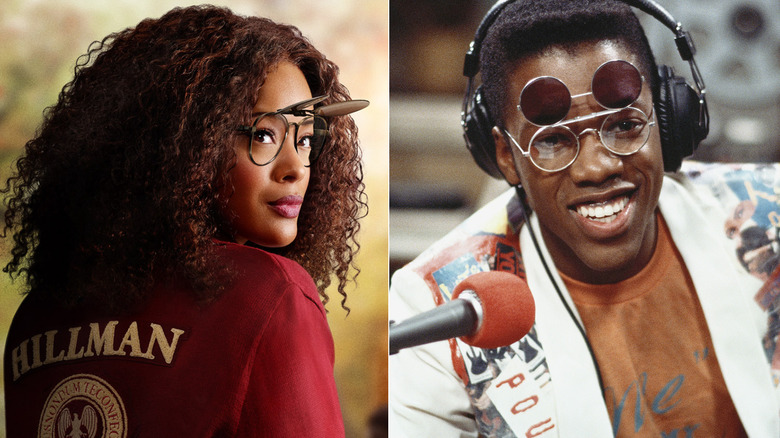
Part of the excitement surrounding the return of A Different World is the blend of familiar faces and a new generation of talent stepping onto the campus of Hillman College. Netflix has confirmed that original cast members Jasmine Guy (Whitley Gilbert), Kadeem Hardison (Dwayne Wayne), Cree Summer (Freddie Brooks), and Darryl M. Bell (Ron Johnson) will reprise their iconic roles, providing a direct connection to the series that inspired millions of viewers. Additional returning cast members include Karen Malina White (Charmaine Brown), Ajai Sanders (Gina Deveaux), and Jada Pinkett Smith, who will once again portray Lena James. Joining the Hillman family are several new faces, including Tony Award winner Maleah Joi Moon as Deborah Wayne, the daughter of Whitley and Dwayne, along with a diverse group of students representing a new generation of HBCU life. The series is also adding notable names such as rapper and actor Method Man, who will portray Coach Coles, and Norman Nixon Jr., who joins the cast as Professor Baptiste. The combination of beloved alumni and fresh talent positions the sequel to honor the legacy of the original while introducing Hillman College to an entirely new audience.
For many viewers, however, the real story is not the return of Hillman College. The real story is whether a television show can still have the same cultural impact it once did.
During the 1980s and 1990s, The Cosby Show and A Different World were not simply television programs. They were weekly events. Families gathered in living rooms across America at the same time to watch what stories would unfold. Conversations happened at school, at church, in barber shops, beauty salons, and around dinner tables because millions of people shared the same experience.
Those shows presented images of Black life that many viewers had never seen on television. Viewers were introduced to professional careers, entrepreneurship, higher education, travel, art, music, culture, and family dynamics that expanded perceptions of what was possible.
When A Different World shifted its focus to life at the fictional Hillman College, it became one of the most influential portrayals of Historically Black Colleges and Universities ever produced. The show introduced millions of viewers to HBCU culture, student leadership, activism, Black Greek Letter Organizations, homecoming traditions, and the value of higher education. For many students, Hillman College became the first place they could imagine themselves attending college.
The influence was so significant that countless professionals, educators, entrepreneurs, and civic leaders still credit the show with inspiring their decision to attend college, particularly an HBCU. The show’s impact extended far beyond entertainment and became a recruiting tool for Black higher education across the country.
But A Different World also exposed viewers to a broader understanding of Black culture. The series tackled issues involving race, class, politics, social justice, relationships, African heritage, and community responsibility. It introduced audiences to different styles of music, diverse viewpoints, and experiences that reflected the complexity of Black life in America.
The same could be said for The Cosby Show. While today’s discussions surrounding Bill Cosby are complicated and often controversial, the cultural significance of the program itself cannot be ignored. The Huxtable family presented a vision of Black excellence that challenged stereotypes and demonstrated that success, education, and family values could coexist in mainstream entertainment.
Perhaps the biggest question facing the sequel is whether modern audiences still have the opportunity to experience television in the same way.
In the era of streaming, viewers have thousands of entertainment options competing for their attention. Families rarely watch the same programs at the same time. Children consume content on phones and tablets. Adults watch different shows on different platforms. The shared national experience that once existed around programs like The Cosby Show and A Different World has largely disappeared.
Today’s media landscape offers more choices than ever before, but it may also provide fewer opportunities for collective inspiration.
Can a television show still motivate students to attend college? Can it inspire viewers to travel, explore new cultures, learn about Black Greek organizations, pursue entrepreneurship, or simply strive to become a better version of themselves? Those are questions that the new generation of Hillman students will have to answer.
What is certain is that A Different World left a legacy that extended far beyond television ratings. It helped shape conversations about education, culture, identity, and opportunity for millions of African Americans. In many ways, the show’s greatest accomplishment was convincing young people that their future could be bigger than their current circumstances.
As Hillman College prepares to open its doors to the world once again, perhaps the opportunity is not simply to revisit a beloved show. Perhaps it is a chance to remind a new generation that education matters, culture matters, community matters, and that sometimes a television show can do much more than entertain.
Sometimes it can change lives.
Read more and stay connected here:
https://www.netflix.com/tudum/articles/a-different-world-sequel-series-hillman-college