BIRMINGHAM, AL — As redevelopment continues to reshape neighborhoods throughout Birmingham, an upcoming two-day conference is looking to make sure everyday people have an opportunity to participate in that growth—not simply watch it happen.
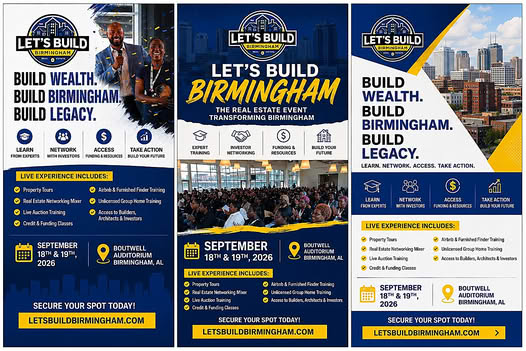
Let’s Build Birmingham II: The National Real Estate Development Conference will take place September 18–19, 2026, at Boutwell Auditorium in downtown Birmingham.
Now in its second year, the conference is expected to bring together hundreds of investors, developers, contractors, builders, entrepreneurs, lenders, real estate professionals and people who simply want to learn how to get started in real estate.
The central message behind the event is straightforward: ownership, opportunity and generational wealth.
According to organizers, attendees will receive practical education on finding and purchasing land, acquiring tax and auction properties, building new construction, understanding zoning and permitting, securing financing and working with architects, builders, contractors and lenders. (Luma)
Participants will also learn about income-producing real estate strategies ranging from traditional development to furnished rentals, Airbnb properties, truck parking and group homes. Organizers say no previous real estate experience is required. (Luma)
Why This Matters for Birmingham
What makes Let’s Build Birmingham particularly timely is what is happening throughout the city.
Birmingham continues to wrestle with vacant, abandoned and tax-delinquent properties while simultaneously experiencing new investment and redevelopment. The Birmingham Land Bank Authority was specifically established to return vacant and abandoned property to productive use, reduce blight, stabilize neighborhoods and encourage redevelopment. (Birmingham Land Bank Authority)
The City of Birmingham has also made neighborhood revitalization and affordable housing major priorities. Its 2026 legislative agenda calls for additional tools to return abandoned properties to productive use and help longtime residents remain in their communities as redevelopment occurs. (City of Birmingham)
That creates both an opportunity and an important question:
Who will own the Birmingham of the future?
There are properties that need rehabilitation. There are vacant lots capable of supporting new construction. There are neighborhoods positioned for additional investment. And there are Birmingham residents who may have the desire to participate but don’t necessarily understand how to move from an idea to actually acquiring property, obtaining financing, navigating zoning and permits, hiring contractors and completing a development.
That is where education becomes important.
Moving From Consumer to Owner
For Birmingham’s Black community in particular, conversations surrounding real estate can also be conversations about generational wealth.
Nationally, the Black homeownership rate continues to trail the White homeownership rate significantly, and historical barriers including redlining and discriminatory lending have contributed to today’s wealth gap. Birmingham itself has been at the center of recent federal action involving allegations of mortgage redlining in majority-Black neighborhoods. (The Washington Post)
At the same time, Birmingham remains attractive to real estate investors because property can still be comparatively affordable relative to many larger American markets.
That combination makes it increasingly important for local residents to understand real estate not only from the perspective of buying a home, but also owning land, developing property and participating in the economic growth of their own neighborhoods.
The objective shouldn’t simply be watching outside investors recognize Birmingham’s potential before the people who already live here do.
More Than Classroom Education
Organizers say Let’s Build Birmingham II is designed to move beyond the traditional conference experience.
Attendees can expect live development case studies, ground-up construction education, financing and lending workshops, access to experienced builders and developers, networking opportunities and real-world examples of redevelopment taking place around Birmingham. (Luma)