
Part 2: Water, Access, and Accountability: A Birmingham Community Concern
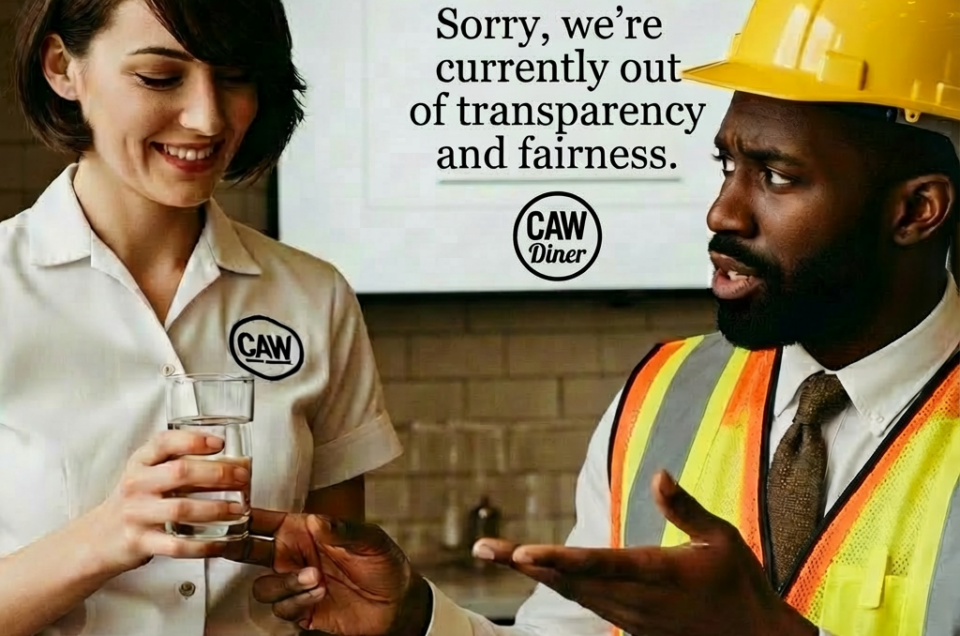
Water systems are not just pipes and treatment plants—they are public assets tied directly to economic opportunity, accountability, and community trust.
For many Black communities in Birmingham, concerns surrounding Central Alabama Water go beyond service delivery. They touch on long-standing issues of access, representation, and fairness in how public infrastructure is governed and who benefits from it.
When Outside Interests Control a Community’s Water
When control of a community’s water system shifts away from local residents, the consequences can be severe. Outside decision-makers are often less accountable to the people who rely on the system daily, which can lead to cost-cutting, reduced maintenance, lack of transparency, and decisions driven by financial or political priorities rather than public health. In many cases across the country, these shifts have resulted in deteriorating infrastructure, unsafe water, rising rates, and delayed responses to crises—disproportionately affecting low-income neighborhoods and communities of color who already face limited political leverage and fewer alternatives.
Cities Where Water System Failures Hit Communities of Color the Hardest
History offers clear warnings about what can happen when community oversight is weakened or removed:
Flint
The Flint water crisis became a national symbol of environmental injustice after state-appointed emergency management led to a water source change that exposed residents—primarily Black and low-income—to lead contamination. Residents’ concerns were dismissed for months before action was taken.
Jackson
Years of underinvestment and governance failures left Jackson’s largely Black population dealing with unsafe drinking water, boil notices, and system breakdowns. State intervention followed prolonged neglect, further complicating accountability and trust.
Newark
Lead contamination in Newark’s water supply disproportionately affected low-income residents and communities of color, highlighting how aging infrastructure and delayed action can endanger public health even in major metropolitan areas.
Detroit
Large-scale water shutoffs tied to affordability policies left thousands of residents—many of them Black—without access to running water, underscoring how financial decision-making around utilities can have life-altering consequences.
These examples show a consistent pattern: when community voices are sidelined and oversight is weakened, the harm falls most heavily on those with the least political and economic power.
Why This Context Matters for Birmingham
Birmingham’s concerns are not isolated. They reflect a national pattern where reduced community control over water systems has often preceded inequitable outcomes. Learning from other cities makes one thing clear—protecting access, transparency, and inclusion is not just about fairness; it is about prevention.
Built by the Community, But Increasingly Out of Reach
Birmingham residents helped build and pay for the region’s water system through decades of ratepayer investment. Historically, community oversight and inclusion programs ensured that local and minority-owned businesses had opportunities to participate in contracts tied to that infrastructure.
Over time, however, governance shifted away from direct community control. Along with that shift came the elimination of programs that helped historically underutilized Black-owned businesses compete for work. The result has been fewer pathways for local contractors to participate in an essential public system their communities helped fund.
Why Water Policy Is an Economic Issue
Water policy doesn’t just affect utility bills. It shapes who gets access to public dollars, who can build capacity through public contracts, and whether infrastructure investment circulates within local neighborhoods.
For Black communities in Birmingham, reduced access means:
- Fewer contracting opportunities for Black-owned businesses
- Less local job creation tied to public projects
- Weaker economic reinvestment in historically marginalized areas
When inclusion mechanisms disappear, disparities widen—even when the system itself remains publicly funded.
The Call for Transparency and Accountability
Customers of Central Alabama Water deserve clarity about how decisions are made and whose voices are represented in those decisions. Public utilities operate best when they remain transparent, accountable, and connected to the communities they serve.
Ensuring that community voices are not sidelined is essential—not just for equity, but for the long-term health and trustworthiness of public institutions.
Community voices matter—especially when it comes to public systems built and funded by the people. If you are a Birmingham resident and a customer of Central Alabama Water, you have the right to be heard.
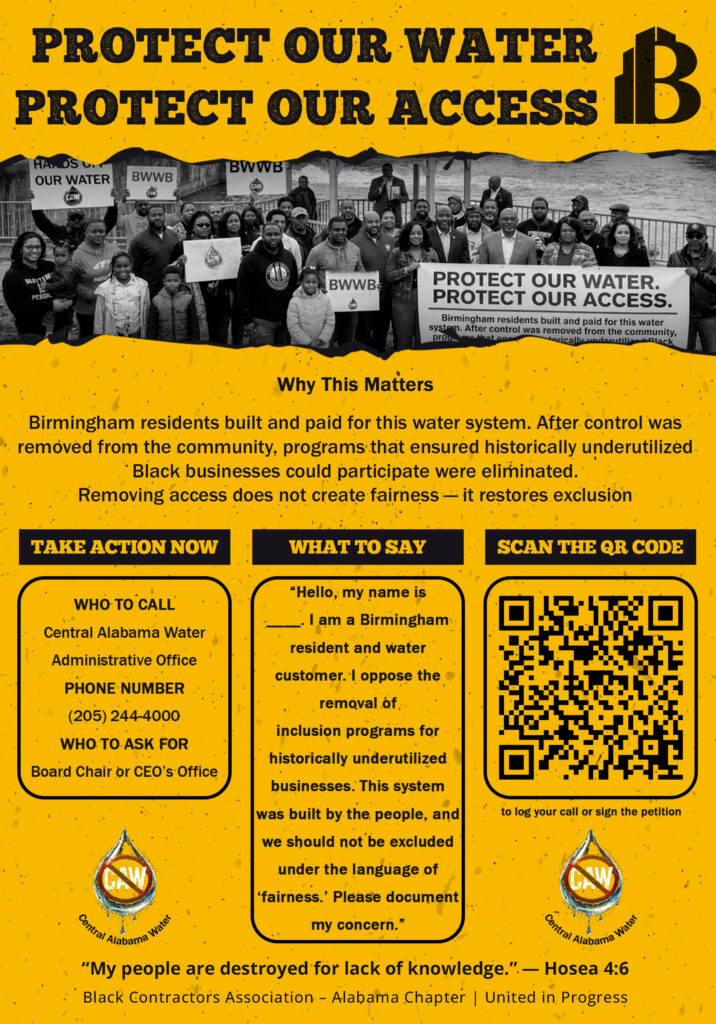
📞 Call and Make Your Voice Count
Who to Call:
Central Alabama Water – Administrative Office
Phone Number:
(205) 244-4000
Who to Ask For:
Board Chair or CEO’s Office
What to Say (Suggested Script)
“Hello, my name is _______. I am a Birmingham resident and a water customer.
I oppose the removal of inclusion programs for historically underutilized businesses.
This water system was built by the people, and access should not be restricted under the language of ‘fairness.’
Please document my concern.”
Calls do not need to be long or confrontational. A clear, respectful statement ensures your concern is officially recorded.
Why the Black Contractors Association – Alabama Chapter Matters
This is where the Black Contractors Association – Alabama Chapter plays a critical role.
The organization works to:
- Advocate for fair access to public contracting
- Support Black-owned construction and trade businesses
- Promote equitable economic development across Alabama
- Serve as a watchdog and voice for inclusion in public systems
By engaging issues like access to water infrastructure opportunities, the Black Contractors Association – Alabama Chapter reinforces the idea that public systems should benefit the full public—not just a select few.
Protecting More Than Water
This conversation is not just about utilities—it’s about fairness, participation, and economic opportunity.
As Birmingham continues to grow and invest in infrastructure, ensuring that Black communities are not excluded from decision-making or economic participation remains critical.
Protecting our water also means protecting access—to opportunity, transparency, and shared progress.
Black Contractors Association – Alabama Chapter United in Progress.
Continue following Urbanham’s ongoing coverage of Central Alabama Water and community impact across Birmingham.
Part 1: How Birmingham Lost Local Control of Its Water System
Part 2: Water, Access, and Accountability: A Birmingham Community Concern
Part 3: What Comes Next? How Community Organizations Can Fight for Access After the Water Takeover
Part 4: So Where Does Birmingham’s Drinking Water Come From?
